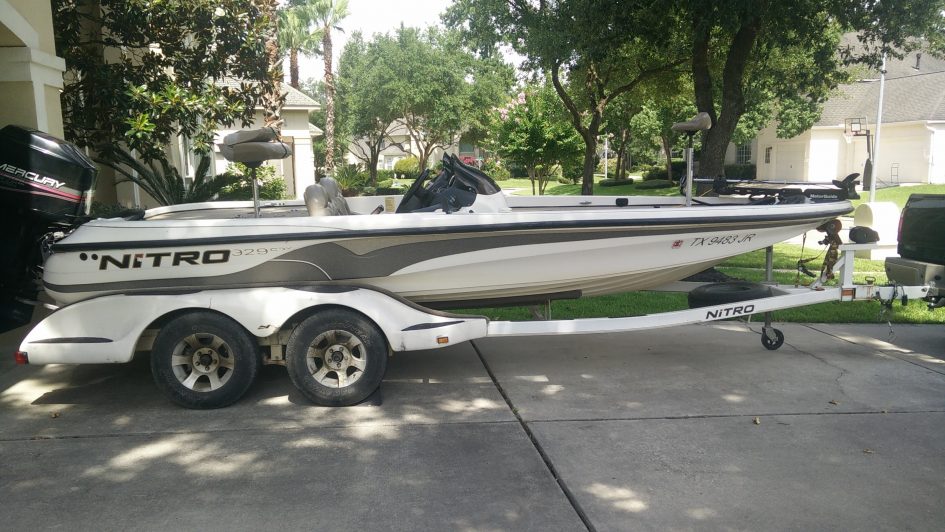
I like to fish. Specifically, I fish for largemouth bass. Like many hobbies, some expenses go with participation in fishing. For bass fishing, these expenses can be anywhere from a few dollars for a fishing pole to over $100k for a new boat and all the latest equipment. My investment in bass fishing tends to be towards the lower end of the scale.
I have a 17-year-old bass boat I bought used ten years ago. Even after replacing the carpet and upholstery, it looks a bit worn. About 90% of the original equipment works fine. The engine and trolling motor work great. It will never be 100% again; I just live with the 10% gap in functionality. While a brand-new boat would be nice, there are two key benefits to keeping this old boat. First, I don’t worry about scratching the boat or bumping into a stump while trolling. This boat is well broken in, so I can concentrate on fishing. Second, I know this boat inside and out. After ten years of ownership, I have experienced about everything that can go wrong with the boat. It would be tough for this boat to surprise me.
A few days ago, I was fishing on a cloudy, damp morning. While the lake was not crowded, there was a boat fishing near me. By looking at the boat, I could see it was brand new and contained the latest equipment. One noticeable addition was a power pole to hold the craft in place over a particularly hot spot. I have thought about adding this to my boat, but they it very expensive. It would cost me over $3K to hold my boat in position. Other fishermen who have power pole claim they couldn’t do without them. I am not so sure; perhaps they are trying to justify the expense. While power poles are cool, for me they haven’t passed the return on investment test.
I talked to this fellow in the new boat, you know, just regular fisherman talk. After a while, he said he needed to leave. As he was sitting in the driver’s seat, I was about to remind him to pull up his trolling motor. For those of you not familiar with bass boats, it is a bad idea to run the main engine with the trolling motor deployed. Don’t ask me how I know this; it happened to a friend of mine once, yeah, that is it. Just as I was about to issue my warning, the guy pushed a button on his console. His trolling motor and power poles automatically retracted, and his main motor lowered down into the water. I was speechless. My first thought was, I need these features on my boat. Maybe I just need a new boat! You see to retract my trolling motor; I must yank on a rope and pull the motor back on board. While this method has never failed me, it simply was not as cool as the automatic retraction.
After the new boat departed, I recovered from the emotional excitement of seeing this new boat in action. I realized I don’t need any of that stuff to catch fish and I certainly don’t need more things that will break. I desired that newfangled stuff because I thought it was cool. It also helped my attitude that I caught a nice bass right after the new boat left.
Separating need from want is a key component of achieving financial success. It is easy to get caught up in the allure of a shiny new object. Cars and cell phones seem to be popular areas of struggle, but this dilemma can show up in all elements of our lives. How do we separate a need from a want?
- Resist impulse buying; all impulse buying is a want (I believe this, feel free to provide a counter argument)
- Take time to reflect and research the item under consideration
- Ask if this item will make your life better
- Is there a positive return on investment?
- Is a logical or emotional decision emotional?
- Emotional decisions are very risky
- Evaluate your finances, can you afford the purchase?
- If you must go into debt, the item better be transportation or shelter
- Even if the item is transportation or shelter, be very thoughtful about debt
- Debt for transportation is sometimes necessary but always a bad financial move
- Avoid debt if possible
- Our default response should be to avoid or delay this sort of purchase
- Go slow, avoid rushing into a purchase
Now you might be saying, Alan, you are no fun at all. Aren’t there times when you should splurge and live a little? Sure, I like to splurge, particularly on vacation. The test for splurging is if it causes financial hardship or regret. There can be a fine line between being a whimsical, carefree spender and being a financially overextended person full of regret.
Make the most of this day!
Leave a Reply